
Black Rock Equine Clinic
Dr. Gary Fouts DVM
Surgery
Black Rock Equine Clinic understands the stress and setbacks that surgeries instigate for our equine patients and their owners. We take every measure to establish safe surgical processes and to give our clients thorough information on each surgical procedure. The clinic is equipped with a padded room complete with a hoist.


1
Castrations
Castration is the removal of the testicles through a small incision. Before surgery, Dr. Fouts will ensure both testicles are down and easily accessible. He performs the procedure with precision, using sterile techniques to minimize the risk of infection and ensure a quick and effective surgery. The surgical site is left open to drain, as this promotes healing and reduces the risk of complications, such as swelling or infection.
2
Cryptorchid
Cryptorchid is the condition in which one (unilateral) or both (bilateral) testicles do not descend normally into the scrotum. The retained testicle may be located anywhere from within the abdomen to within the inguinal canal. The condition is likely the result of a complex combination of genetic, hormonal, and mechanical factors.
3
Hernia Repair
Horses with hernias will have a bulge on the bottom of the body wall that is located at the umbilical remnant or the inguinal canal. The hernia usually contains portions of the intestinal tract that will move in and out of the hernia sac. When you palpate, or feel the hernia, the contents within the hernia can be pushed back into the abdomen and a fibrous ring can be palpated at the margin of the hernia sac. Hernias less than 1 inch can resolve on their own if the contents are pushed back into the abdomen frequently. Surgical treatment of hernias is needed if the size of the hernia has not improved when the foal is 4 months old or if the hernia is larger than 2 inches in diameter. Hernia repairs are performed with the horse in dorsal recumbency, and an incision is made around the hernia and the hernia sac is removed. Generally, the abdominal contents adjacent to the hernia are examined and then the incision in the abdominal wall is sutured closed, along with the subcutaneous tissue and skin.
4
Rectovaginal Laceration Repair
Rectovaginal repair in horses, typically addressing injuries from dystocia (difficult birth), involves surgical techniques like the modified Goetz or Aanes technique to reconstruct the torn tissue, often using one or two-stage surgical repairs. The procedure creates a new vaginal shelf to close the defect and prevent fecal contamination of the vagina, with success rates generally high, though postoperative complications like suture dehiscence can occur.
5
Eyelid Laceration Repair
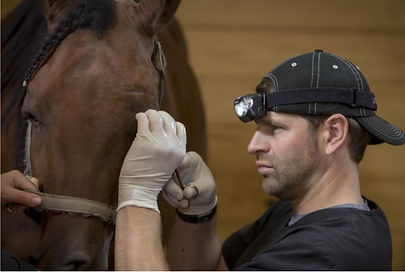
Eyelid laceration repair in a horse requires prompt veterinary attention to ensure the eye itself has not been damaged. The procedure involves heavy sedation and local anesthesia, thorough wound cleaning, meticulous suture placement to precisely appose the deep and superficial layers of the eyelid, and a thorough examination for concurrent ocular damage. A two-layer closure using absorbable and non-absorbable sutures is recommended, and postoperative care includes topical antibiotics and systemic anti-inflammatories.
6
Caslicks
An equine Caslick's procedure is a surgical procedure that partially sutures the upper portion of the mare's vulvar lips together to prevent the aspiration of air, fecal material, and other contaminants into the reproductive tract. This procedure is often performed on mares with poor vulvar conformation to help prevent chronic uterine infections (endometritis) and improve fertility. For pregnant mares, the Caslick's must be surgically opened before foaling to prevent severe lacerations during birth.
7
Enucleation
Equine enucleation is the surgical removal of a horse's eye, most commonly performed to resolve a painful, blind, or cancerous eye that cannot be saved or effectively treated. Reasons for the surgery include severe eye infections, trauma, chronic conditions like equine recurrent uveitis (ERU), or tumors.
8
Mass Removal
Mass removal in equine medicine involves surgically excising tumors and abnormal growths from a horse's body using a range of techniques depending on the mass's type, size, and location. A diagnostic workup of the mass will be done by pathology to determine if it's malignant or benign.
9
Wound Repair
Equine wound repair involves immediate cleaning with saline or dilute antiseptic, debridement, and potentially suturing, followed by daily monitoring, bandaging, and application of topical agents to prevent infection and promote healing. The type of wound dictates the treatment: closed wounds may be sutured, while others heal by "second intention" with granulation tissue formation.